
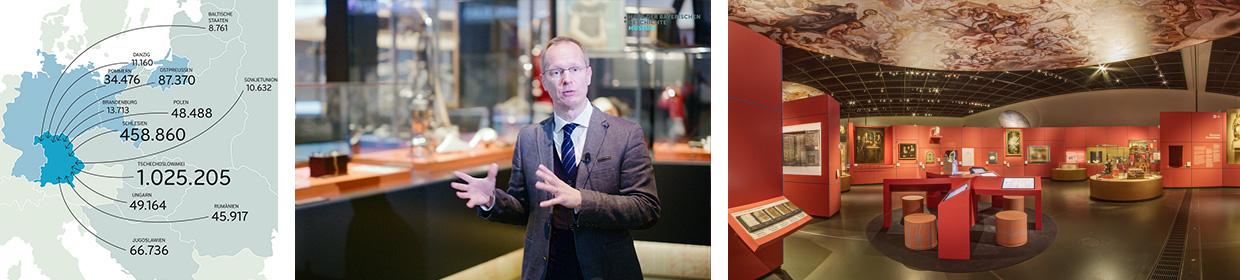
The Haus der Bayerischen Geschichte is able to look back on a long history of exhibitions: It has been on the go throughout Bavaria with exhibitions since 1976 and, on a regular basis, since 1983. The museum on Regensburg’s Donaumarkt will add a permanent facility.
Permanent Exhibition at the Museum
In its permanent exhibition, the Museum der Bayerischen Geschichte in Regensburg tells how Bavaria became a Free State and what makes it so distinctive. Bavarian history, from the emergence of the kingdom down to the present, is presented engagingly by multimedia on over 2,500 square meters.
Special Exhibitions at the Museum
In addition to the permanent exhibition on the upper floor, the Museum der Bayerischen Geschichte in Regensburg shows changing special exhibitions on the ground floor of the museum building and in the Bavariathek.
Bavarian State Exhibitions
The Bavarian State Exhibitions present topics of Bavarian history in historically significant places all over Bavaria on an annually rotating basis. The exhibitions under this brand draw over 100,000 visitors during their duration of six months.
Map of Bavarian State Exhibitions
The Haus der Bayerischen Geschichte has called on numerous places in Bavaria in over three decades. This map shows the venues of Bavarian State Exhibition.
Double Phaeton from Benz
Twilight of the Gods II - Bavarian State Exhibition 2021
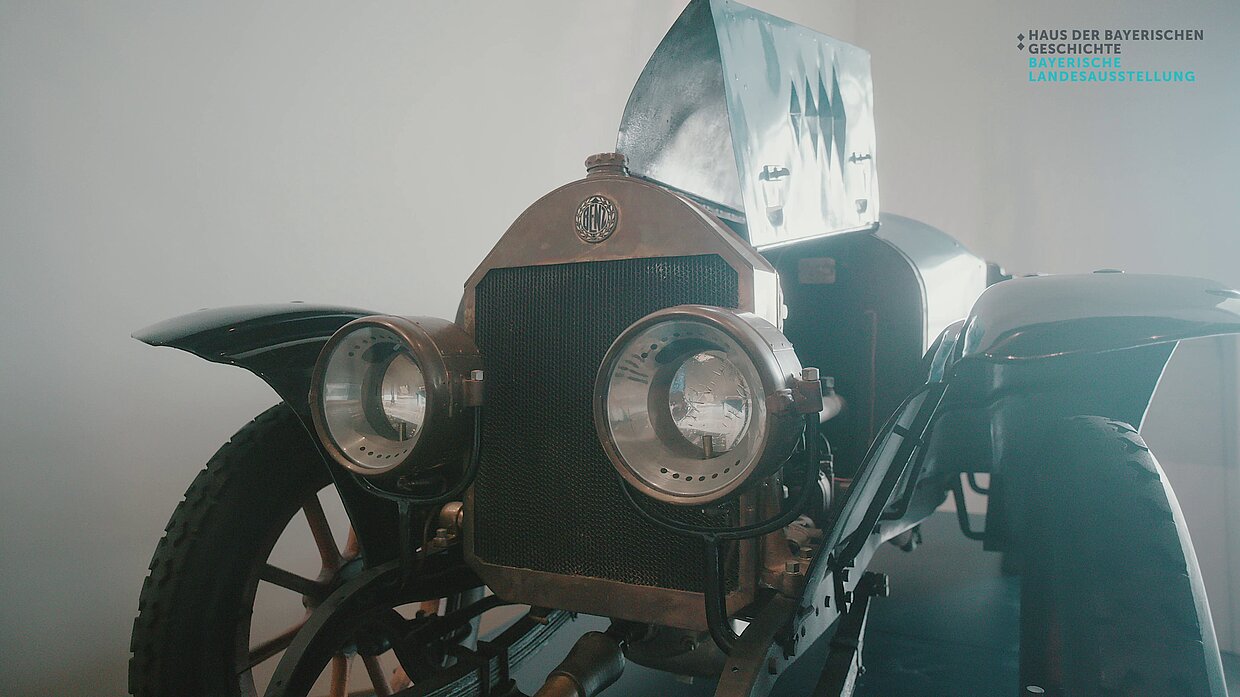
The video "The Benz Double Phaeton is here" documents the spectacular arrival of one of the outstanding exhibits at the Bavarian State Exhibition 2021. This historic classic car, a masterpiece of early automotive history, impresses not only with its technical sophistication, but also with its elegant appearance. The video offers you a fascinating look behind the scenes and shows how this extraordinary vehicle found its way into the exhibition and is presented there as a dazzling highlight.
Information on the completed exhibition is only available in the archive.
The Keplerhaus in Regensburg - a virtual tour
City liberated. Wittelsbach founding towns - Bavarian State Exhibition 2020
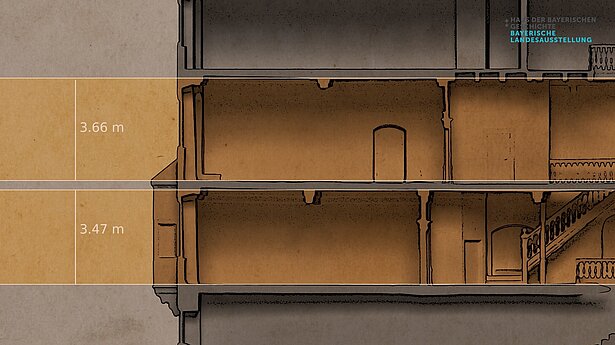
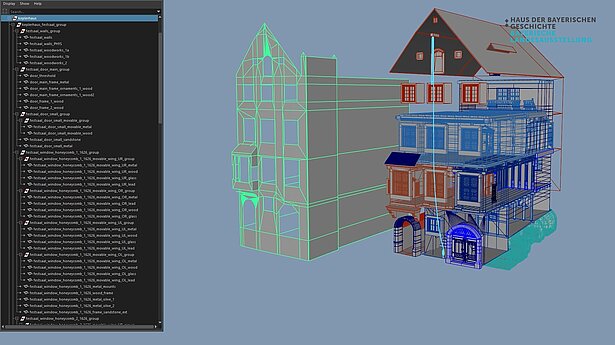
The Keplerhaus in Regensburg, named after the famous astronomer Johannes Kepler, who lived and died here, is a fascinating piece of the city's history. Although it is known for its connection to Kepler, the building itself tells a much older story, delving deep into medieval house building and Regensburg's urban development. Thanks to the generous support of the Friends of the House of Bavarian History, an impressive 3D model of the Kepler House has been created, bringing the entire house and all its rooms to life. In a series of films, you will not only receive basic information about the Keplerhaus, but also in-depth insights into special aspects of the building. A making-of film rounds off this comprehensive audiovisual offering and gives you a fascinating look behind the scenes of the creation of the model.
Information on the completed exhibition is only available in the archive.
Film 1 provides the most important basic information about the Keplerhaus:
Click here for the film "The Keplerhaus in Regensburg - inside and out".
Films 2 to 5 go into more detail on various individual topics relating to the house:
- Click here for the film "The Keplerhaus in Regensburg - wood and stone".
- Click here for the film "The Keplerhaus in Regensburg - living and privacy".
- Click here for the movie "The Keplerhaus in Regensburg - Living and Working".
In film 6 you can see the making-of of this film series:
Munich 1570 - a flight through Jakob Sandtner's model of the city
City liberated. Wittelsbach founding towns - Bavarian State Exhibition 2020
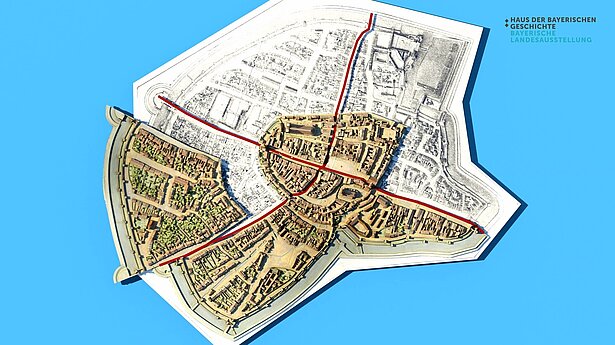
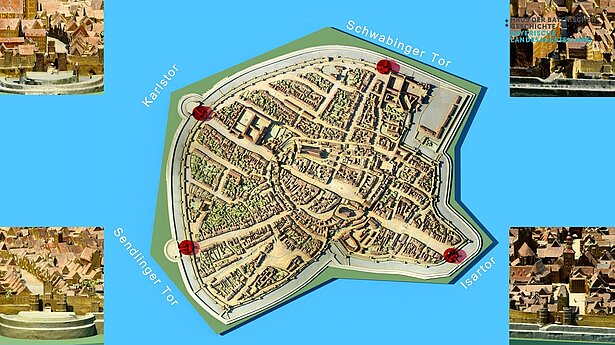
Immerse yourself in the fascinating world of Munich in 1570 with our accompanying film series "Munich 1570 - a flight through Jakob Sandtner's city model". In collaboration with the Technical University of Munich, five impressive films have been produced that take you on an exciting journey through historical Munich.
Information on the finished exhibition is only available in the archive.
The first film takes you back to the origins of the city, to the "Heinrichsstadt", named after its founder Henry the Lion, and shows the Schrannenplatz, today's Marienplatz, which was already clearly recognizable at the time.
Click here for the first film "Munich's streets and squares - urban planning in the Middle Ages".
The second film highlights Munich's growth and the need for a new ring of walls that encompassed the four historic districts.
Click here for the second film "Munich is growing - the city expansions".
This third film focuses on Munich's impressive city fortifications.
Click here for the third film "Walls, towers, gates - the city fortifications of Munich".
In the fourth film, you will discover the development of the Wittelsbach residences, from the city castle to today's residence.
Click here for the fourth film "From city castle to residence - the Wittelsbach dukes in Munich".
The fifth film is dedicated to the parish churches, monasteries and the Jesuit College, which was later added to the model, and shows the religious diversity of the city.
Click here for the fourth film "Parish churches, monasteries and the Jesuits - Munich's churches".
St. Catherine's Hospital in Regensburg around 1300
City liberated. Wittelsbach founding towns - Bavarian State Exhibition 2020
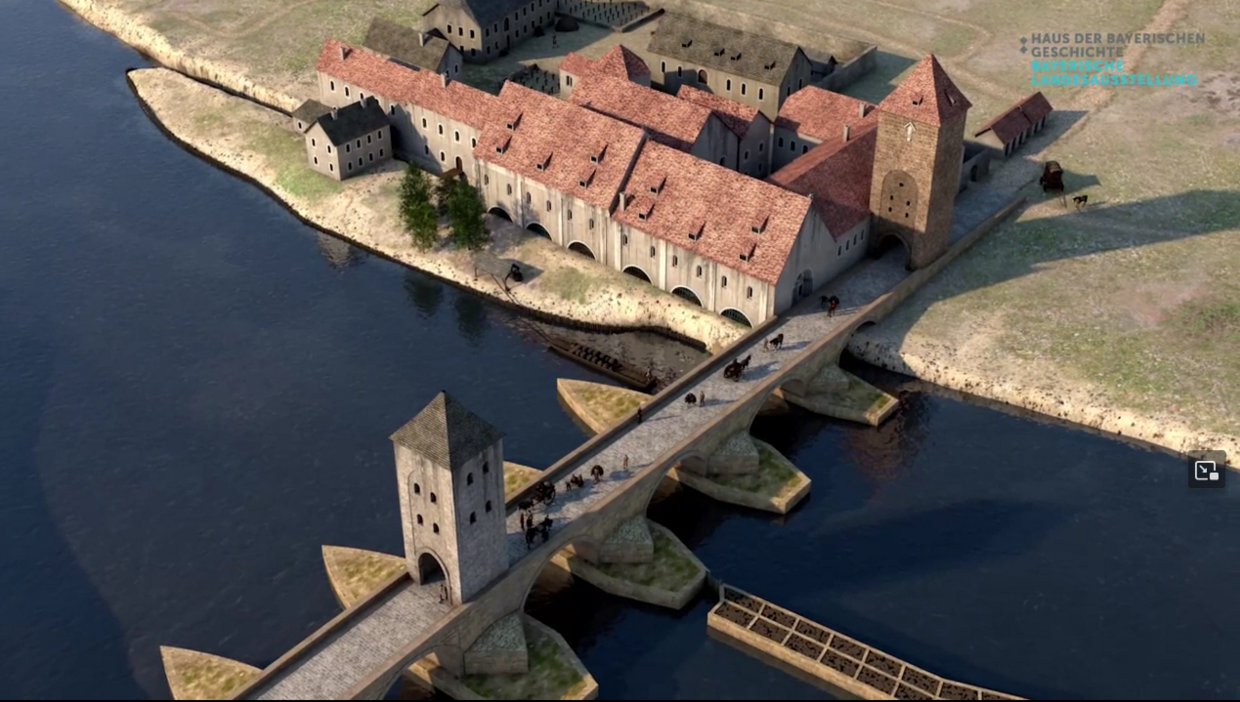
The accompanying film "St. Katharinenspital in Regensburg around 1300" takes you on a journey through the history of one of Bavaria's oldest hospitals. St. Katharinenspital, founded at the beginning of the 13th century, is even older than Regensburg's famous Gothic cathedral. Strategically located at one of the most important entrances to the city, the Stone Bridge, the hospital was repeatedly exposed to the destruction of war - especially during the Thirty Years' War and the Napoleonic era. Nevertheless, the core of the medieval hospital complex has survived to this day.
The film, which was shown for the first time in the Bavarian State Exhibition 2020, offers fascinating insights into the eventful history and architectural development of this historic facility.
Information on the completed exhibition is only available in the archive.
Digital tour through the exhibition
Tempo, Tempo - Bavaria in the 1920s - Bavarian exhibition 2020
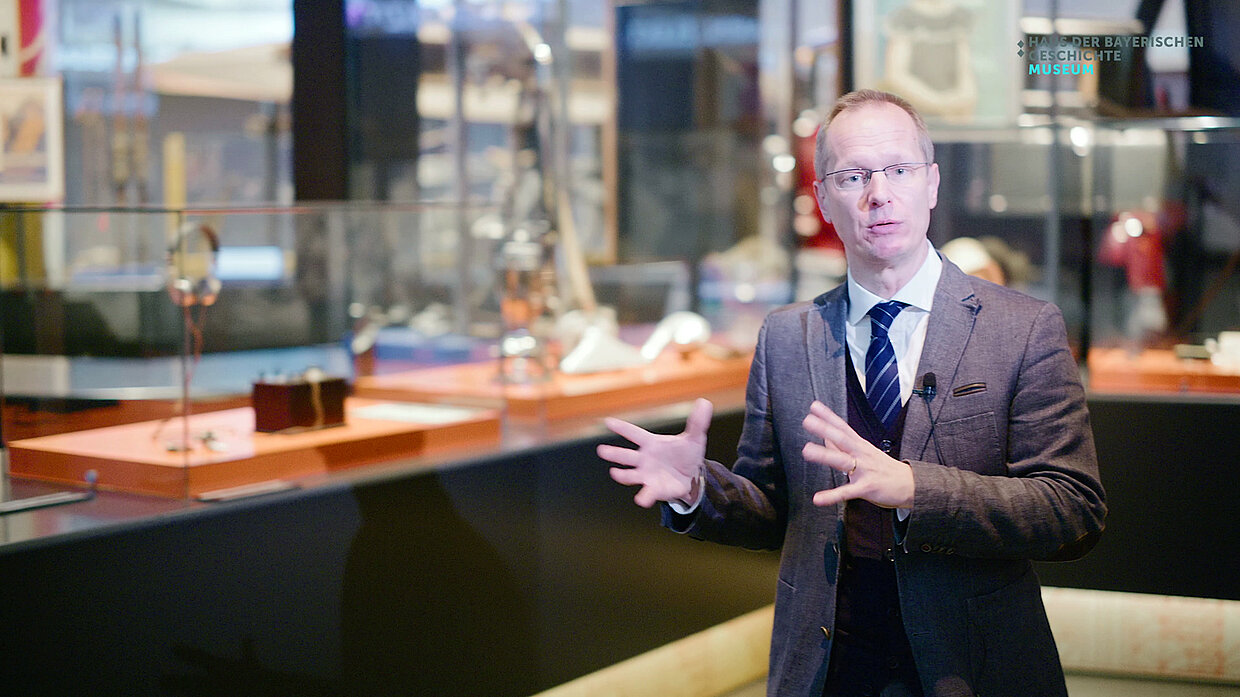
In the cinematic tour of the Bavarian exhibition "Tempo, Tempo - Bavaria in the 1920s", curator Dr. Wolfgang Reinicke takes you on an exciting short tour through the highlights of the exhibition. Discover special exhibits such as the FAUN "K3", a rare vintage car of which only two examples still exist today - an absolute rarity and a highlight of the exhibition. In addition to this gem, you will learn much more about the dynamic 1920s in Bavaria on the tour. Immerse yourself in a time full of speed and change and let yourself be guided through this extraordinary exhibition.
Information on the closed exhibition is only available in the archive.
Exhibition setup in time lapse
100 treasures from 1000 years - Bavarian State Exhibition 2019

The Bavarian State Exhibition "100 Treasures from 1000 Years" is complemented by an accompanying video that shows the construction of the exhibition in the Danube Hall of the museum in Regensburg in fast motion. In the video you can see how the exhibition took shape step by step - from the initial preparations to the final staging of the 100 important treasures from 1000 years of Bavarian history.
Information on the completed exhibition is only available in the archive.
Myth of Bavaria - PAVILLON
Myth of Bavaria - Bavarian State Exhibition 2018
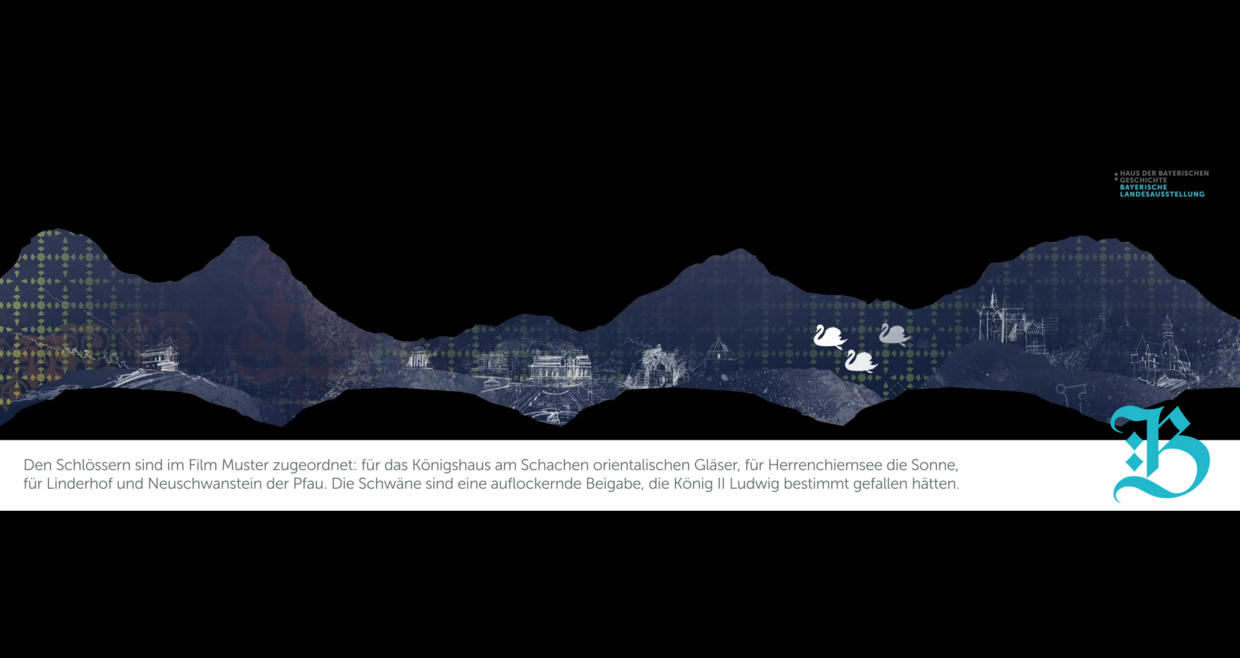
An impressive accompanying film enriched the 2018 Bavarian State Exhibition "Forest, Mountains and the King's Dream - The Myth of Bavaria". It sheds light on King Ludwig II's special relationship with the landscapes around Hohenschwangau. Since his childhood, Ludwig experienced this region as his personal garden, his "playground", in which he located all his palace projects - whether built or just planned.
The video not only shows the real landscape formations from the Schachen to the Graswang Valley to the island of Herrenchiemsee, based on data from NASA, but also the chronology of the buildings as they were conceived and planned by Ludwig II.
The detailed drawings of the construction plans, made by set designer Heinz Hauser, provide a deep insight into Ludwig's creative processes. The music composed especially for the film by Raphael Jaklitsch from Munich, which contains echoes of Richard Wagner at the beginning, rounds off the audiovisual experience perfectly.
Information on the completed exhibition is only available in the archive.