The Bavarian Exhibition 2026 depicts the struggle for democracy in the early 1920s and how Adolf Hitler, who moved to Bavaria in 1913, rose from being a spectator to a supporting actor and finally to the leading role.
Drawing on the great writers and theater makers of the time, the exhibition tells the political history of Bavaria in the early 1920s in the form of a drama.
1918 – Revolution
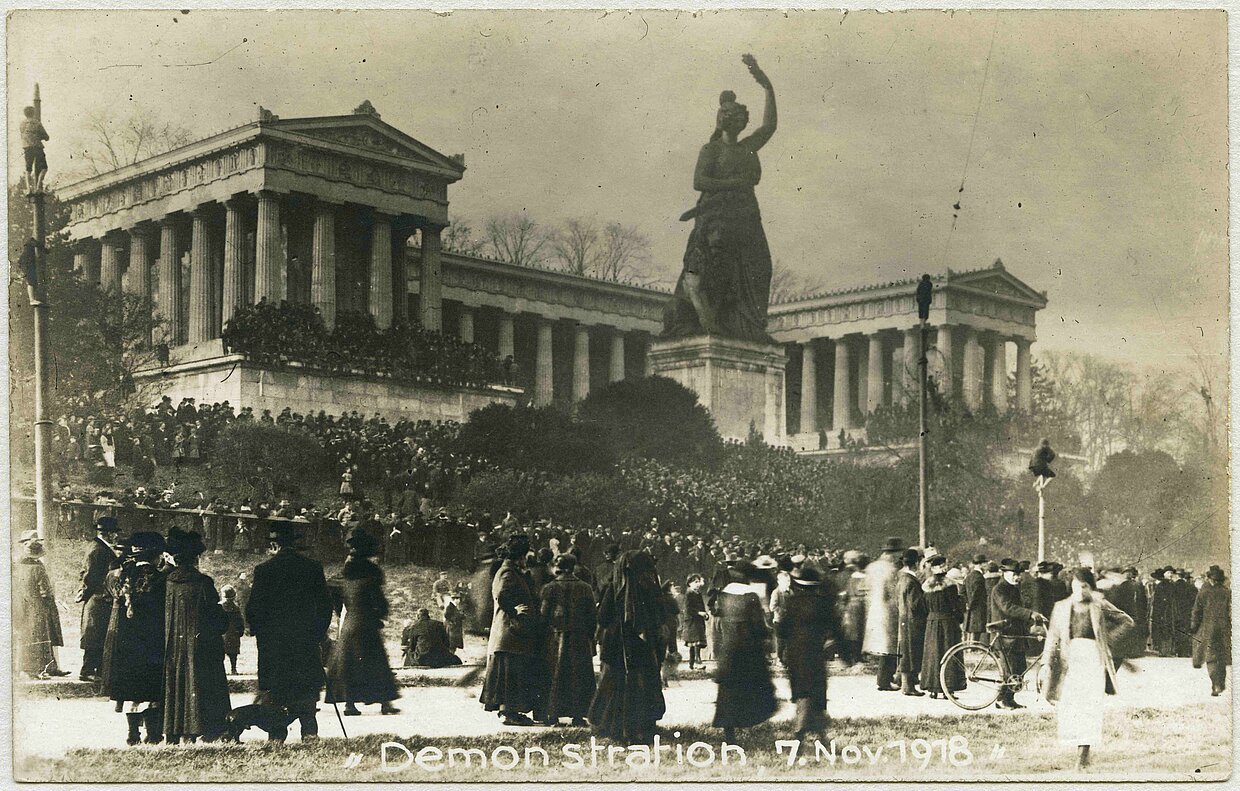
On November 7, 1918, tens of thousands demonstrate for peace at Munich's Theresienwiese. After four years of World War, the monarchy has collapsed. Led by Kurt Eisner, a small group of demonstrators wins over the soldiers for the revolution after the peace demonstration. Eisner declares an end to over 700 years of Wittelsbach rule in Bavaria and proclaims a free state. With his assassination in February 1919 and the proclamation of council republics, the revolution becomes more radical. At the beginning of May, the left-wing council rule in Bavaria is brutally crushed by the Reichswehr and Freikorps. Adolf Hitler, a soldier who had returned from the war with no prospects, is also present at the time.
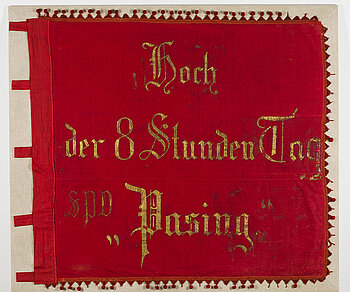
In 1918, workers were the first to protest en masse for an end to the war and for political reforms. In November 1918, the monarchy was finally overthrown. From then on, the political protagonists continued the struggle for democracy with theatrical, stage-like performances. Find out more online at the HdBG portal "Revolution! Bavaria 1918/19."
Kurt Eisner's typewriter

Kurt Eisner wrote as a journalist for various social democratic newspapers. He often dictated to his second wife, Else (1887–1940). From 1915 onwards, he took a stand against German war policy in his personal correspondence and eventually also in his articles. During the World War and in the days leading up to the revolution, Eisner's typewriter was his most important tool and means of communication. After Eisner's assassination on February 21, 1919, the typewriter remained in the family's possession for over 106 years and "traveled" through half of Central Europe during this time due to the persecution of Eisner's descendants in the Third Reich. In December 2025, Kurt Eisner's great-grandson donated this important object of Bavarian history to the Haus der Bayerischen Geschichte.
Bavarian Cell of order
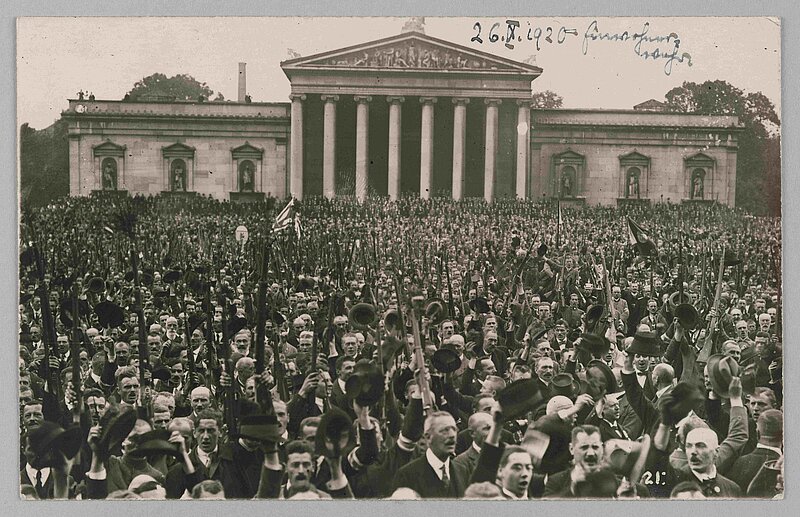
In the early 1920s, Prime Minister Gustav von Kahr transforms Bavaria into a reactionary "cell of order" and a gathering place for enemies of the republic. He bases his power on paramilitary organizations such as the civil guards. Kahr gives the opening speech at the Opening of the Bavarian Civil Guards' First State Marksmanship Contest. It becomes a demonstration of power by right-wing forces and causes an international stir two years after the end of the First World War. Adolf Hitler, who rises to become the most important propaganda speaker of the extreme right-wing splinter party NSDAP, is still on the sidelines in this episode. His first campaign trip takes him to Austria a few days after the Bavarian Civil Guards' First State Marksmanship Contest.
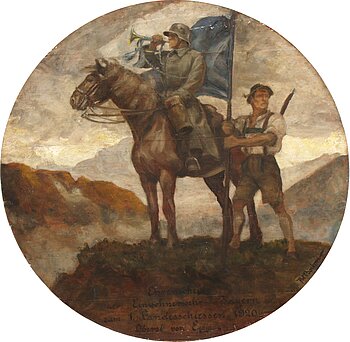
On the occasion of the Bavarian Civil Guards' First State Marksmanship Contest, sponsors such as Freikorps leader Franz von Epp donate prizes for the shooting competitions. The motif on the honorary plaque reflects the self-image of the civil guards, who after the revolution stand for the supposed protection of the homeland and a return to "peace and order."
1923 - In the Beer Hall
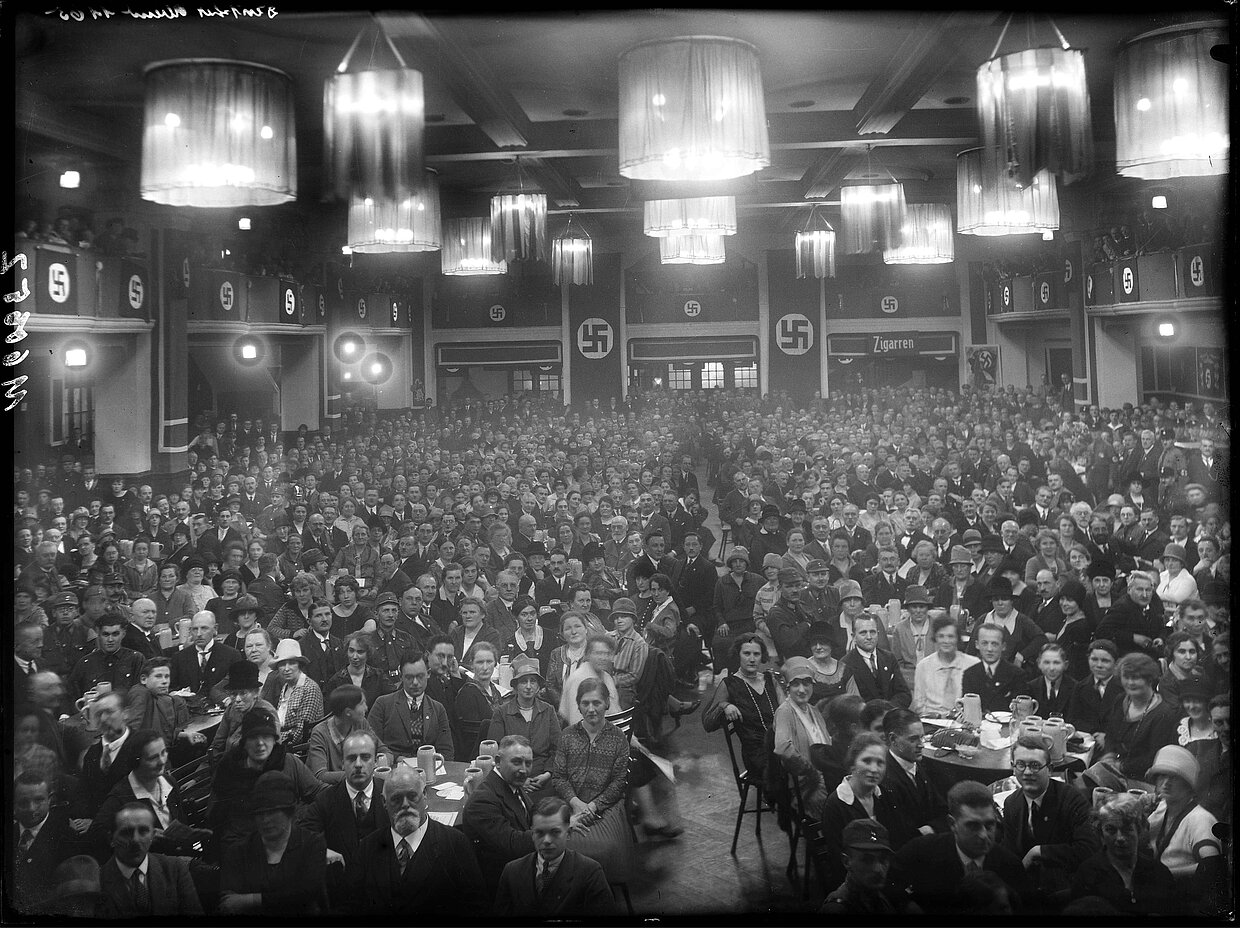
The crisis year of 1923 brings support for extremists and leads the Weimar Republic to the brink of collapse. The occupation of the Ruhr, ongoing currency devaluation, fears of a communist uprising, and anger over the harsh terms of the Treaty of Versailles filled Adolf Hitler's Beer Hall speeches. In 1923, membership in the extreme right-wing splinter party NSDAP grew from 8,000 to 55,000, with the majority of members in Bavaria.
Article 231 of the Treaty of Versailles, signed on June 28, 1919, assigns sole responsibility for the war to Germany and stipulates high reparations, territorial cessions, and a limit on military strength to 100,000 troops. This creates an image among the population of a Germany that has been chained and robbed of its freedoms. For Hitler, the treaty and the democratic politicians who signed it were constant targets of his speeches.
... and in the high society salons
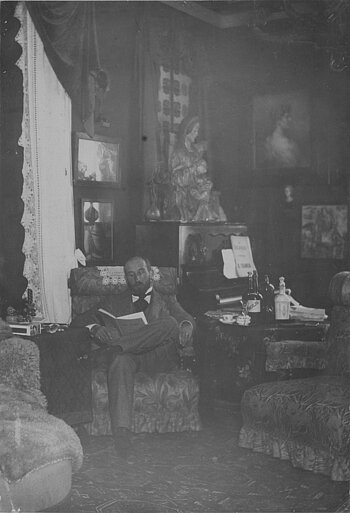
Fear of losing status abounded among nobles, officers, civil servants, businesspeople and in many middle-class salons after the revolution. Prosperity and the way of life appeared threatened by the end of the old order, inflation and disaffected workers.Through the mediation of Dietrich Eckart and Ernst Hanfstaengl, Hitler gains access to "higher circles." In the salons of the Bechsteins, Bruckmanns, and Wagners, he meets writers, scholars, and industrial barons—many of them radical right-wingers. They promote the upstart Hitler, who is supposed to help them defend against "Bolshevism" and restore German greatness.
The rise of the National Socialists is viewed critically by liberal societies, such as those gathered around art collector Alfred Pringsheim and his wife Hedwig.
At the „Deutscher Tag” (German Day) in Bayreuth in September 1923, Adolf Hitler meets for the first time with the family of Richard Wagner, whom he admires. Wagner's daughter-in-law Winifred becomes an ardent admirer of Hitler, whom she visits countless times in Bayreuth. The close relationship with the Wagner family meant an enormous social upgrade for Hitler. Winifred Wagner provided him with important contacts and remained loyal to him throughout her life. In 1926, she joined the NSDAP.
1923 - Putsch
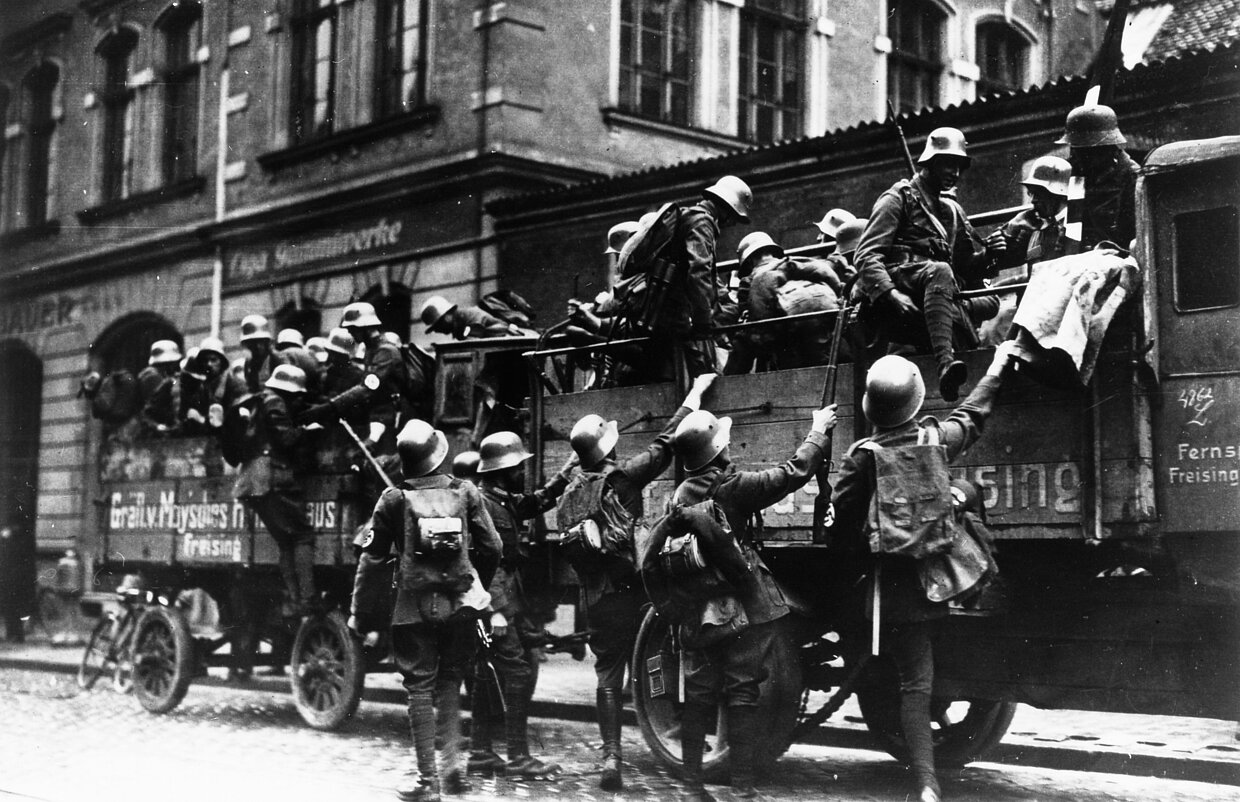
In the fall of the crisis year 1923, the Bavarian state government appoints Gustav von Kahr as General State Commissar with dictatorial powers. When he presents his program on November 8, 1923, in the packed Bürgerbräukeller, many in the audience expect an explanation of how the hated Berlin Reich government can be overthrown. But the event is abruptly interrupted. Hitler took the stage and declared the government deposed. After Bavarian decision-makers, the Reichswehr, and the state police opposed the putsch, it failed just a few hours later.
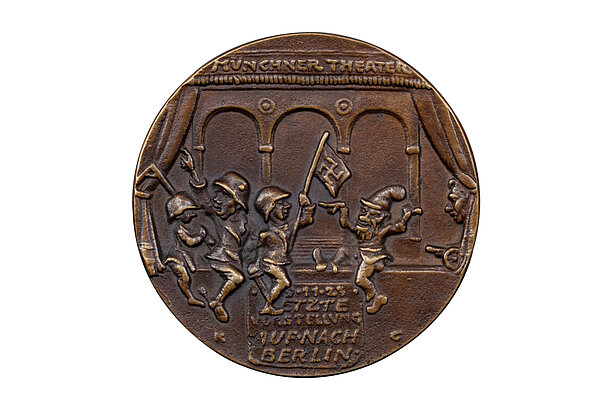
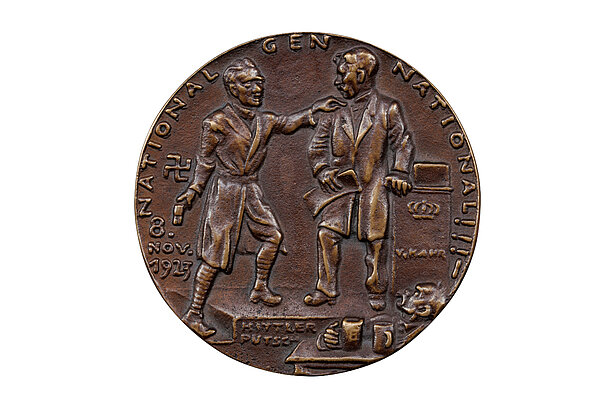
In a last desperate attempt, the putsch leaders launch a demonstration march through Munich on November 9, 1923. It is stopped by the Bavarian state police at the Feldherrnhalle. A shootout ensued, leaving 20 people dead, including four state police officers. In the public perception, the putsch mutated—despite being radical and dangerous—into a mocked "puppet show" and "clownery." The notorious underestimation of the putsch and Hitler would continue in a fateful manner until 1933.
1924 - Travesty of Justice
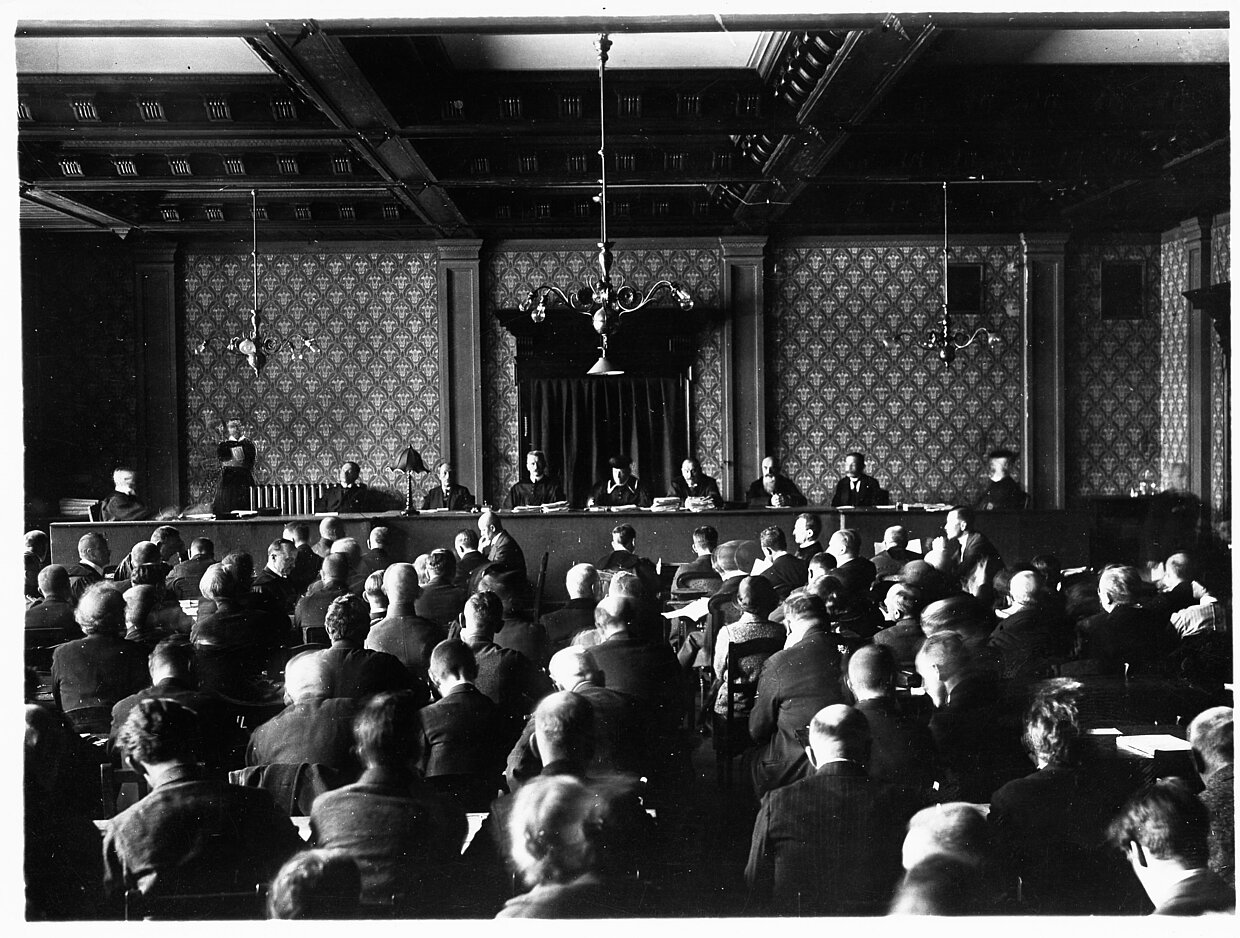
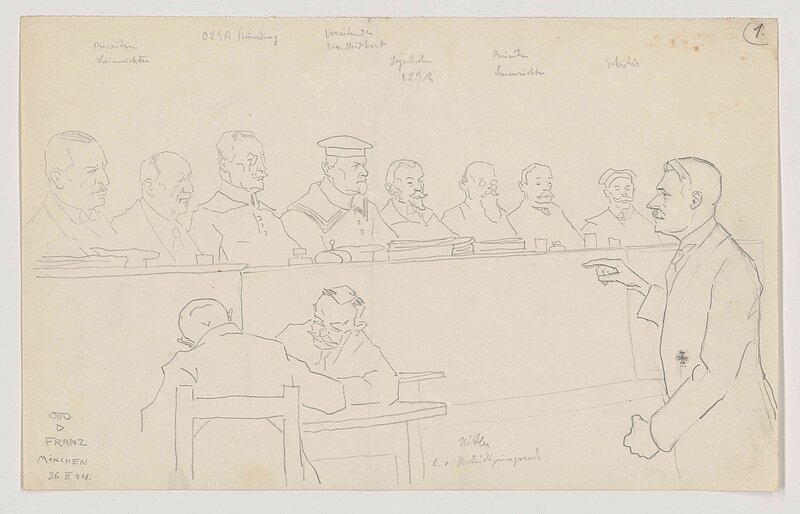
On February 26, 1924, the trial of Hitler and other high traitors begins. Following an objection by the Bavarian government, the trial does not take place before the cognizant Reich Court in Leipzig, but before a Munich People's Court. With the support of Bavarian Minister of Justice Franz Gürtner and Judge Georg Neithardt, Hitler turns the courtroom into his stage. He turned his defeat in front of the Feldherrnhalle into a propaganda victory.
Since photography is prohibited, courtroom artists such as Otto D. Franz (1871–1963) provide impressions of the trial. Here he documents a monologue by Hitler during the proceedings. On April 1, 1924, the court, also depicted here, imposes scandalously lenient sentences: Hitler is sentenced to five years of privileged fortress confinement in Landsberg for "honorable motives." There he holds meetings, receives visitors, and writes the inflammatory pamphlet "Mein Kampf." He is released early on December 20, 1924.
1925–1933 Epilogue
It's almost a miracle: the young democracy survives all crises for the time being. The republic celebrates the "Golden Twenties." The political situation in Bavaria also stabilizes. Meanwhile, Adolf Hitler begins rebuilding the NSDAP, which now seeks to seize power through formal legal channels. In Bavaria, the government temporarily bans Hitler from speaking. He no longer seems to pose a threat. This proves to be a mistake, as events from 1929 onwards show. The global economic crisis leads to mass unemployment, poverty, and political radicalization.
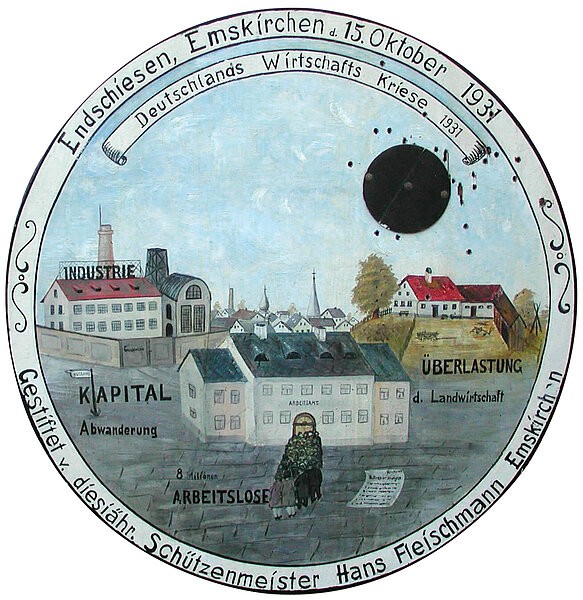
A target shows the cycle of crisis: American financial institutions that have invested heavily in Germany stop lending, orders dry up, production is scaled back, and unemployment multiplies.